Introduction
NCS & EMG are important tests that help doctors find nerve and muscle problems. NCS stands for Nerve Conduction Study. EMG means Electromyography. Both tests show how well your nerves and muscles work. Because these tests can find hidden issues, they are often used to diagnose nerve disorders. In this blog, you will learn how NCS & EMG work, what to expect, and how they help doctors find answers.
What are NCS & EMG?
Nerve Conduction Study (NCS) checks how fast and strong signals travel along your nerves. Electromyography (EMG) looks at how your muscles respond to nerve signals. Together, these tests help doctors find problems in your nerves or muscles. For example, they can show if you have nerve damage or muscle disease. Many people get these tests when they have numbness, tingling, or weakness.
How do NCS & EMG work?
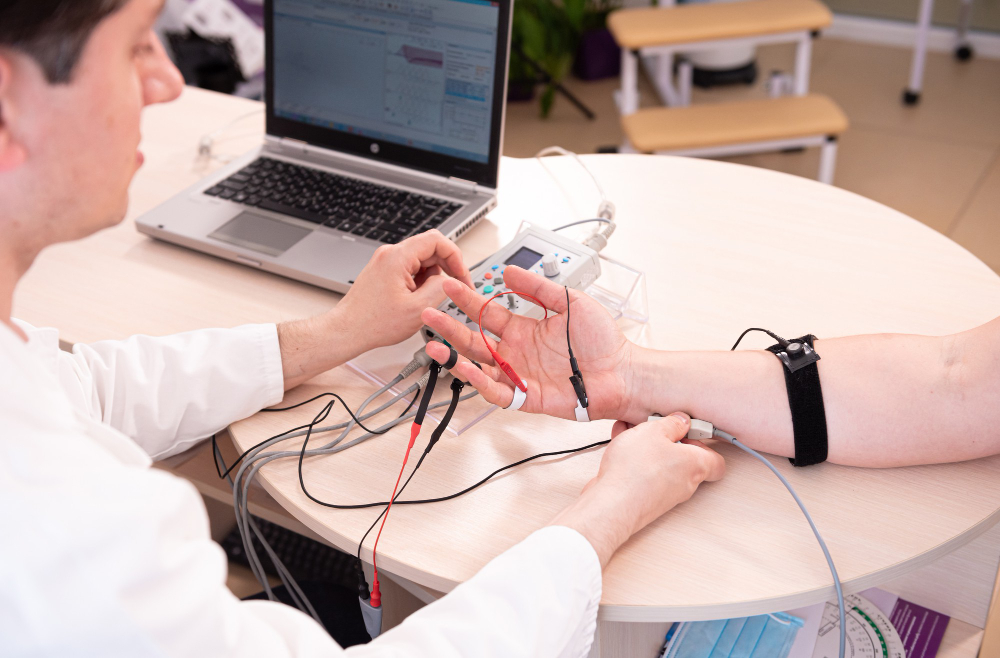
First, let’s look at the nerve conduction study procedure. During NCS, a doctor or technician places small patches called electrodes on your skin. Next, a gentle electrical pulse is sent through your nerve. This pulse may feel like a quick tap or tingle. The electrodes measure how fast and strong the signal moves. This helps find any blockages or slow spots in your nerves.
After NCS, you may have an electromyography test. For EMG, a thin needle electrode goes into a muscle. You may feel a quick pinch, but it is usually not very painful. The doctor asks you to relax and then tighten your muscle. The EMG machine records the muscle’s electrical activity. This shows if your muscle or the nerve that controls it is working right.
Why are NCS & EMG performed?
Doctors use NCS & EMG to diagnose nerve disorders and muscle problems. Often, these tests help when you have symptoms like:
Some common conditions found with these tests include:
Because these tests give clear answers, they help doctors plan the right treatment for you.
Preparation and Safety
Many people wonder how to prepare for NCS EMG. Luckily, you do not need to do much. However, you should:
Both tests are safe for most people. The electrical pulses used in NCS are very mild. The EMG needle is thin and does not stay in your muscle. Some people may feel mild soreness or bruising after EMG, but this goes away quickly. According to the CDC and neurology experts, serious risks are very rare.
Interpreting Results
After the tests, a neurologist reviews your results. If your nerve signals are slow or weak, this may show nerve damage. If your muscles do not respond well, this could mean a muscle problem. Sometimes, both nerves and muscles are affected. Your doctor will explain what the results mean for you. Based on the findings, you may need more tests or a treatment plan.
Benefits and Limitations
NCS & EMG offer many benefits. For example, they can:
However, these tests have some limits. Sometimes, they may not find very mild problems. Also, the tests do not show the cause of every symptom. Rarely, you may feel mild pain or bruising after EMG. But overall, the risks are low and the benefits are high.
Frequently Asked Questions (FAQ)
Conclusion
NCS & EMG are safe and helpful tests for diagnosing nerve and muscle problems. They give doctors important information to guide your care. If you have symptoms like numbness, tingling, or weakness, these tests may help find the cause. Consult a neurologist for personalized advice about NCS & EMG testing.